
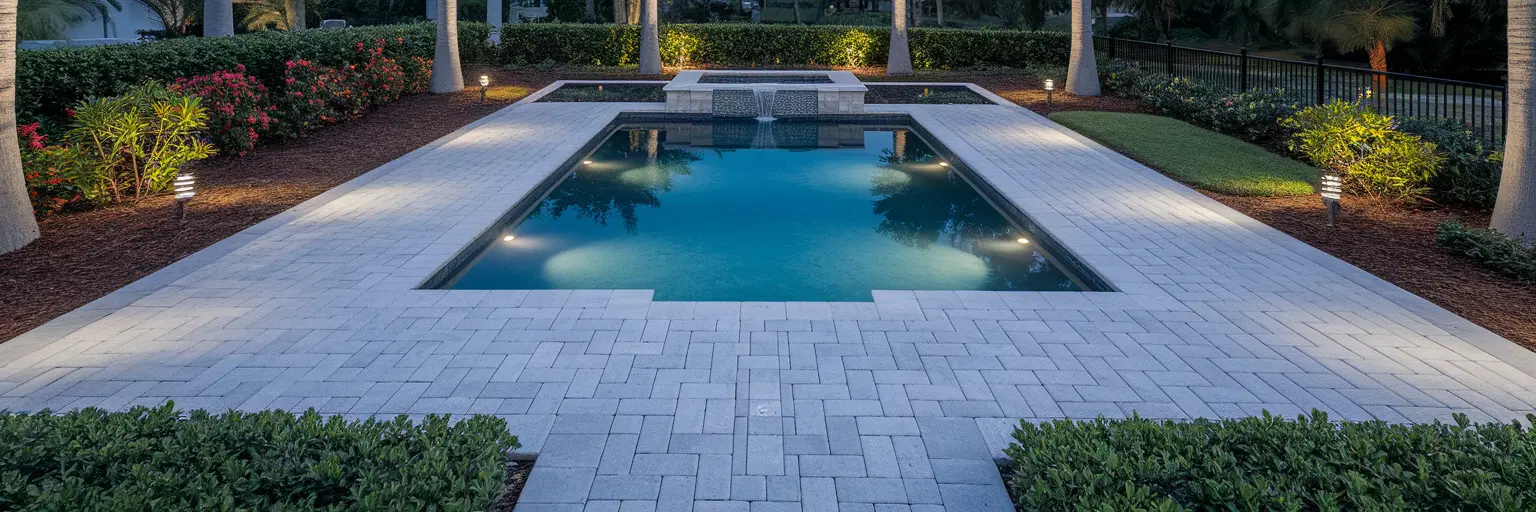
The intense Florida sun and frequent downpours in St. Johns can quickly degrade outdoor surfaces, turning a dream pool deck into a maintenance headache. Poured concrete, a common choice, often cracks under the thermal stress and becomes dangerously slick after a summer shower. This is where pavers offer a far more resilient and safer solution. Their interlocking system allows for natural expansion and contraction, preventing the large, unsightly cracks that plague solid slabs.
More importantly, the small joints between each paver allow rainwater to permeate into the base below, drastically reducing standing water and slip hazards. On hot days, you will notice that lighter colored pavers remain cooler underfoot than a solid sheet of heat absorbing concrete. For these reasons, interlocking pavers are simply the best pavers for Florida climate, offering a foundation of safety, durability, and comfort for your poolside activities.
Designing Your Ideal Outdoor Oasis
With the practical benefits established, the exciting part begins: designing your personal retreat. The right paver selection can transform the entire feel of your backyard. Lighter colors create an open, airy atmosphere and stay cooler, while intricate patterns like herringbone or basketweave can complement the specific architectural styles found in St. Johns communities from Nocatee to Julington Creek. Your choice of material is just as important. Travertine offers natural, earthy tones, while high quality concrete pavers from trusted brands like Tremron and Belgard provide a vast spectrum of colors and textures proven to resist fading and salt exposure.
A truly great paver pool deck in St Johns, FL, is more than just a surface; it is an extension of your home. Think about creating functional zones for different activities:
- A lounging area with ample space for chaise lounges to soak up the sun.
- A dining zone conveniently located near the house or an outdoor kitchen.
- A cozy conversation nook, perhaps centered around a fire pit for cooler evenings.
Translating these ideas into a cohesive plan is where professional guidance shines. To get a sense of the possibilities, you can explore a vast collection of styles in our online catalog.
| Feature | Travertine Pavers | High-Quality Concrete Pavers |
|---|---|---|
| Heat Resistance | Excellent; naturally stays cool to the touch. | Good; lighter colors reflect more heat. |
| Style & Color | Natural, earthy tones with unique patterns. | Wide range of colors, shapes, and textures. |
| Slip Resistance | Naturally porous and textured surface. | Often manufactured with a non-slip texture. |
| Durability | Extremely durable; resistant to fading and weathering. | Very strong and made to withstand heavy use. |
Note: This table compares the two most popular and effective paver materials for the St. Johns climate. Your choice depends on balancing aesthetic preference for natural stone versus the design versatility of manufactured pavers.
The Foundation of a Lasting Installation
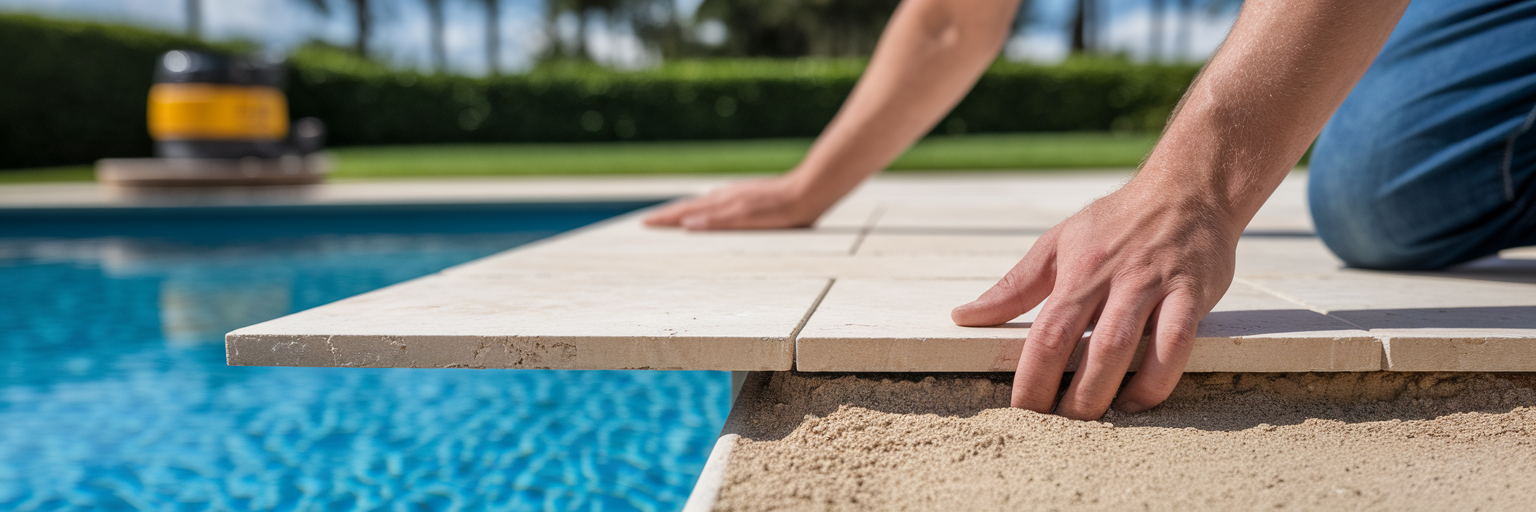
A beautiful paver surface is only as good as the foundation beneath it. This brief pool deck installation guide highlights the critical, unseen work that ensures your deck remains stable and level for decades. Cutting corners here is what separates a short term fix from a long term investment. Quality workmanship follows a precise process:
- Site Preparation: The process begins with excavating the area, typically extending about 12 inches beyond the deck’s final perimeter. This creates a stable edge and ensures water drains away from the structure properly.
- Base Construction: Next, a 6 to 8 inch base of crushed stone is laid and compacted. This layer is the structural backbone of the entire deck, providing the strength to support furniture and foot traffic without shifting.
- Bedding Sand: A 1 inch layer of bedding sand is then spread and screeded to create a perfectly level surface. This is what the pavers will sit on, and its precision is key to a smooth finish.
- Compaction: A plate compactor is used on the stone base and again on the final pavers. This locks everything tightly together, a non negotiable step for preventing settling and creating an even, durable surface.
This methodical approach, along with coordinating with local utility companies before any digging begins, is a hallmark of professional work. The complexity involved highlights the value of our expert paver installation services.
Mastering Drainage for Poolside Safety and Longevity
While we touched on how pavers handle water, proper drainage is a science that protects your entire investment. A professional installation incorporates a subtle slope, or grade, of 1 to 2 percent. This means the deck drops about a quarter inch for every foot, guiding water away from both the pool and your home’s foundation. Achieving this requires precision, ensuring a consistent grade across the entire surface.
The paver system enhances this design. Instead of forcing water to run off in sheets like concrete does, it allows rain to permeate through the joints and into the gravel base below. This prevents water from building up hydrostatic pressure against the pool shell, a major cause of costly cracks and structural damage. During Florida’s heavy summer storms, this system also protects your home’s foundation and surrounding landscape from water infiltration, providing peace of mind that goes far beyond a dry surface.
Elevating Your Design with Vertical Paver Features
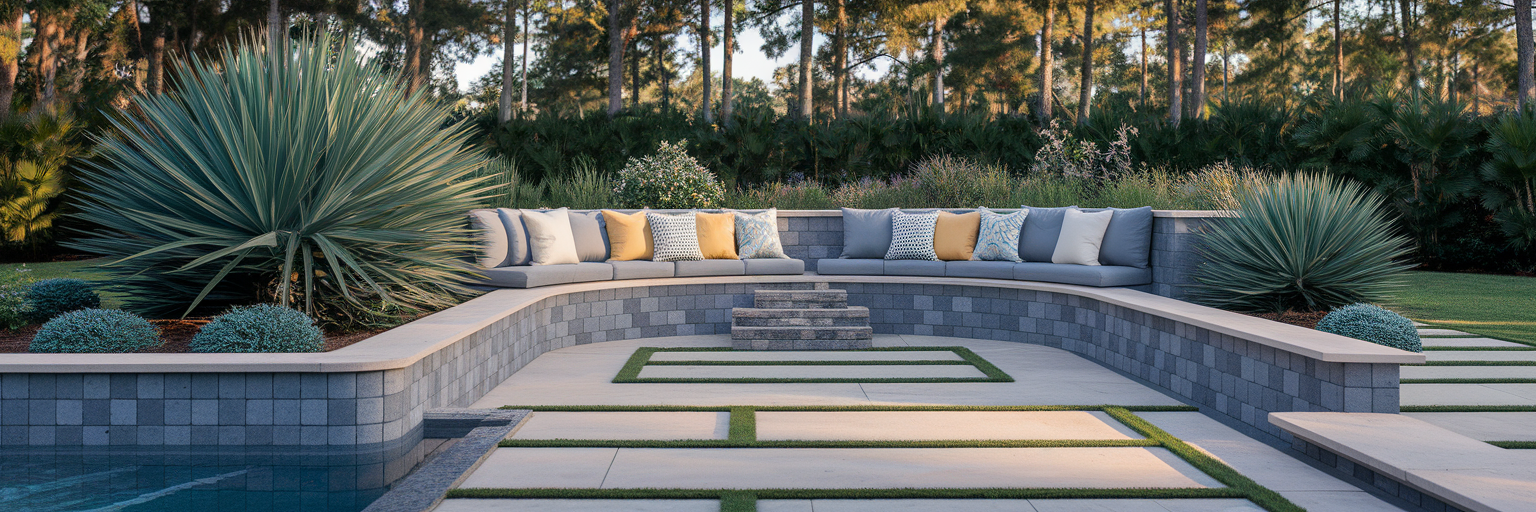
Why stop at the floor? A truly customized outdoor space uses pavers to add dimension and functionality. Vertical elements like retaining walls, built in seating, and privacy screens can turn a simple pool deck into a multi layered oasis. In a yard with a slight slope, a low retaining wall can prevent soil erosion into the pool while creating beautiful, terraced planters. That same wall can be capped with a smooth, flat stone to serve as permanent, durable bench seating, saving space and adding a sophisticated design feature.
There are many paver retaining wall ideas to consider. A gently curved wall can soften the straight lines of a rectangular pool, while a series of straight, tiered walls can form the base for an outdoor kitchen or bar area. These structures require specialized skills to ensure they are both beautiful and structurally sound. Experienced installers can bring these complex designs to life, integrating them seamlessly with your pool deck. To see how these features look in real world applications, homeowners can view a gallery of our completed projects.
Protecting Your Paver Investment for Years to Come
Once your beautiful paver pool deck is complete, a few simple steps will protect it for years. Applying a quality sealer is one of the most important. Sealing shields pavers from common poolside stains like sunscreen and spilled drinks, enhances their natural color, and inhibits weed growth in the joints. For routine care, the process is straightforward:
- Regularly sweep away leaves and other debris to prevent organic stains.
- Rinse the deck with a garden hose as needed to wash away dirt and pollen.
- Avoid using a high pressure washer, as the intense spray can dislodge the joint sand that locks pavers in place.
Perhaps the greatest long term benefit of pavers is their repairability. If a paver becomes stained or damaged, it can be individually lifted and replaced, a simple fix that is impossible with a cracked concrete slab. This makes a paver deck a wise investment that retains its beauty with minimal effort. For essential tasks like sealing or repairs, it is always best to rely on professional paver installers in the Jacksonville area to get the job done right.